


“Republicans, Democrats and independents alike understand that regulation is better than prohibition, and that good science takes time.”
By Mike Simpson, Lovewell Farms via Rhode Island Current
At a moment when Americans across the political spectrum say they want evidence-based policy, Congress is on the verge of repeating a familiar mistake: banning first and studying later.
Bipartisan legislation recently introduced in both the U.S. House and Senate would delay the impending federal ban on hemp-derived products. This is not to legalize anything new, but instead to give regulators, researchers and farmers time to do what Congress says it wants to do: Gather data, set clear rules and regulate responsibly.
I write this as a hemp farmer and small-business owner myself. Having started Lovewell Farms in 2018, I know firsthand the implications a ban on hemp-derived products would have on my farm, Rhode Island’s only USDA-certified organic hemp farm. Here is what legislators may not fully understand: Hemp is not something that can be turned on and off with a vote. Farmers need to know in the next 100 days if the plant they will harvest in October will be legal in November.
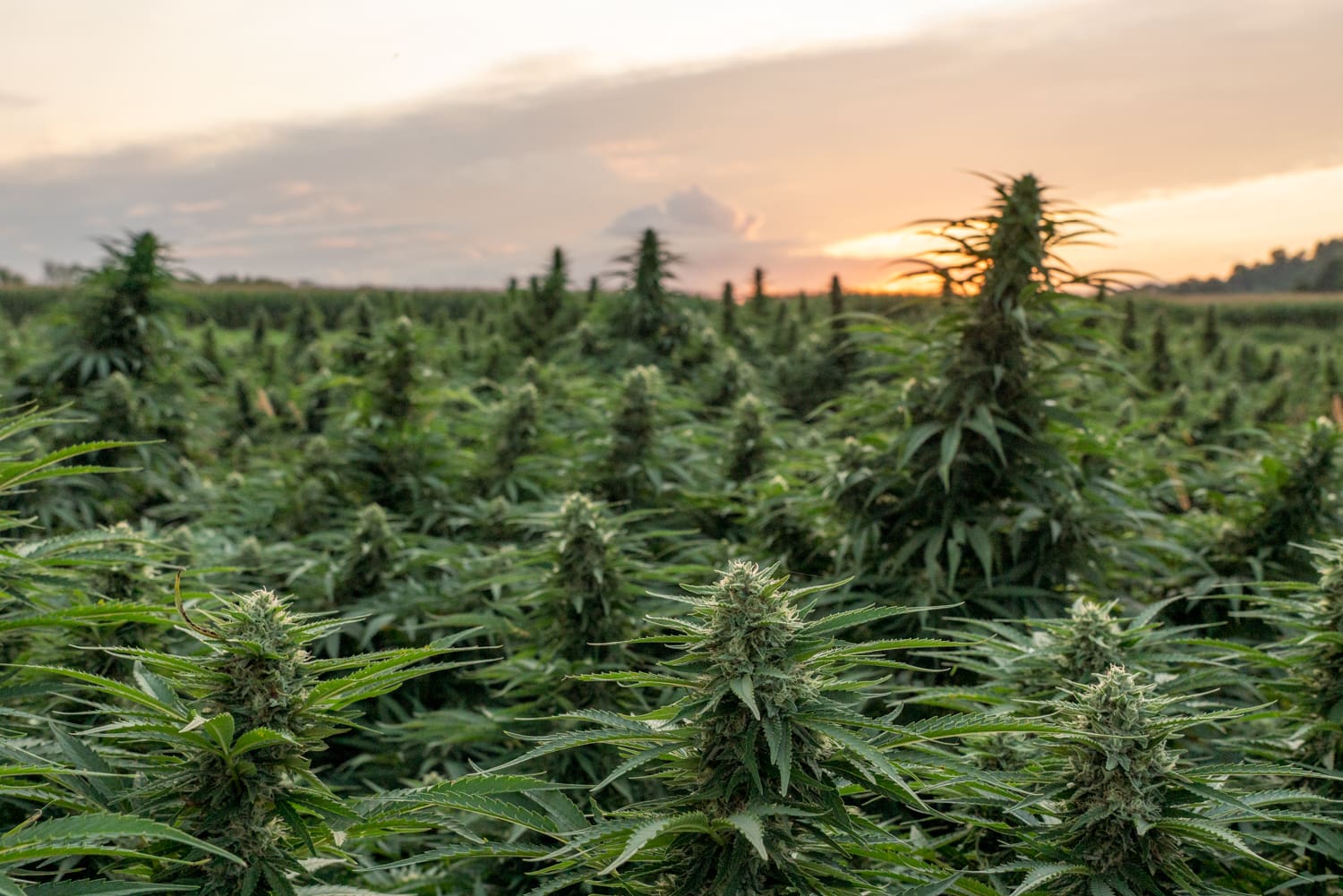
Seeds are planted in April. Fields are cultivated all summer. Crops are harvested in October. A federal ban that takes effect in November lands after farmers have already committed an entire season’s labor, capital and compliance costs. There is no rewind button for agriculture. That uncertainty is already forcing farms to shut down. A sudden ban would finish the job.
The Senate bill (S.3686), introduced by Sens. Amy Klobuchar, a Minnesota Democrat, and co-sponsors Rand Paul, a Kentucky Republican, and Jeff Merkley, an Oregon Democrat, would delay enforcement of the hemp-derived product ban for two years, allowing Congress to pursue regulatory alternatives rather than defaulting to prohibition. A companion bill in the House (H.7010), led by Rep. Jim Baird, an Indiana Republican, also with bipartisan cosponsors, would do the same.
Together, these bills recognize a basic agricultural reality: Farmers need predictability before they plant.
Importantly, Congress is not only proposing a delay, it is also debating regulation. The Hemp Enforcement, Modernization, and Protection (HEMP) Act is yet another bipartisan bill introduced in the House (H.7212) that would establish a federal framework for hemp-derived products, including clear safety standards, labeling requirements, enforcement authority and defined potency limits by product type. The proposal sets per-serving and per-package caps for non-intoxicating oral hemp products, inhalables, topicals and THC-containing items, demonstrating that consumer protection and responsible oversight are achievable without resorting to prohibition.
Taken together, these bills show that Congress has viable, bipartisan alternatives to an outright ban, if it chooses to use them.
At this point, this is not a debate about intoxicating THC limits. It is about whether hemp policy will be guided by science or by fear. That distinction matters, because federal science is finally catching up. In 2025, the Trump administration issued an executive order directing federal agencies to expand cannabis and cannabidiol (CBD) research, including the use of large federal health datasets such as Medicare records to study safety, efficacy and outcomes.
The order did not legalize CBD or add it as a Medicare benefit, but it explicitly acknowledged that cannabinoids require rigorous study before sweeping policy decisions are made. Congress is now hurtling toward prohibition at the exact moment the federal government is building the science-based research infrastructure needed to answer the hard questions.
Even the concerns raised by opponents of hemp-derived products argue for regulation, not bans. If products require clearer labeling, age restrictions, potency standards or enforcement tools, like those already in place in Rhode Island, those are state-by-state regulatory challenges. Rhode Island already regulates hemp products. Farmers and businesses here should not be penalized because other states have dragged their feet to create a regulated market.
Prohibition does not solve these issues; it simply pushes them out of sight, into unregulated markets that are less safe for consumers. A hemp ban would also push production overseas. If hemp farming in the United States collapses, demand will not disappear. It will just shift to imported cannabinoids from countries like Canada or China, where American regulators have far less visibility or control. That outcome harms local farmers, consumers, and public safety alike.
Rhode Island’s Reps. Gabe Amo and Seth Magaziner previously voted against a federal hemp ban embedded in a larger spending bill. That was the right call. Sens. Jack Reed and Sheldon Whitehouse, however, explicitly voted to keep the hemp ban language in that same bill. Rhode Island’s senators now have an opportunity to support local farmers and small businesses by cosponsoring this bipartisan delay bill (S.3686). Rhode Island’s representatives can do the same with the corresponding companion bill in the House (H.7010).
This is one of the few issues in Congress that remains genuinely bipartisan. Republicans, Democrats and independents alike understand that regulation is better than prohibition, and that good science takes time. Congress should not dismantle a domestic $30 billion agricultural industry with over 300,000 jobs just as meaningful research is beginning. A temporary delay protects farmers, supports small businesses, keeps hemp farming rooted here in the United States and allows policymakers to regulate with evidence rather than panic.
Prohibition without evidence is not policymaking. Rhode Island’s delegation should stand with farmers, small businesses and science by cosponsoring the bipartisan bills that delay this ban and allow regulation to catch up with reality.
Mike Simpson is the co-founder of Lovewell Farms, Rhode Island’s only U.S. Department of Agriculture (USDA) organic hemp farm. He is also a historian, educator and longtime advocate for policy reform. He was previously deputy director for Regulate Rhode Island and an initiative coordinator for Marijuana Policy Project in Maine. He now lives in Providence and farms in the village of Hope Valley in Hopkinton.
This story was first published by Rhode Island Current.
Photo courtesy of Max Jackson.
