


The best weed ads don’t feel like ads anymore. They feel like content built to survive the algorithm and earn the repost.
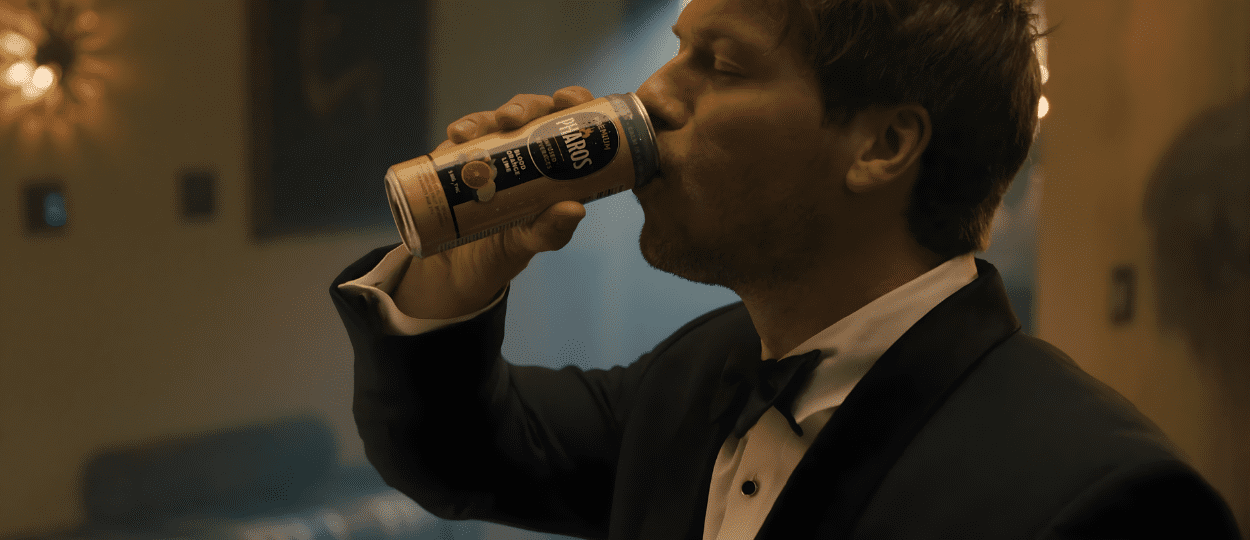
A high-stakes poker table. One last infused drink. A fight that escalates into clean, choreographed chaos.
That’s the premise of a new brand film from Pharos, built around Hollywood actor, filmmaker and stunt performer Tim Neff, created by Neff in collaboration with Ismahawk, and premiering first as an exclusive drop with High Times. It plays less like a “buy this” spot and more like a short action thriller, the kind of thing you’d expect to scroll past on a streaming platform, not in an industry that still gets throttled for saying its own name.
This is where weed advertising keeps drifting: away from obvious product pushes, toward story.
Production credits: Tim Neff (Co-Director, Writer, Producer, Actor and Action Designer); Danny Shepherd (Co-Director and Producer); Jeremy Le (Director of Photography); Angela Domanico (Associate Producer & Makeup Artist); Ian Volner (1st Assistant Director); Preston Scott (1st Assistant Camera); Michael “Doc” Deitch (Camera Operator). Cast: Tim Neff as “Alexander Vale”; Vladislav Litvinenko as “Red Eye”; Anastasia Lutz as “Waitress”; Lance Brazil as “Satch”; Ivan Fuchs as “Dealer”.
For years, the modern cannabis business has operated inside a marketing paradox. It’s legal in a growing number of states, taxed like a vice and treated like a regulated consumer category. Yet it remains locked out of the most normal tools that make mainstream brands mainstream. Broadcast standards, federal illegality and platform enforcement have kept cannabis from buying the kinds of ad lanes that shape culture at scale.
So the culture built its own lanes. Creators did what brands couldn’t. Brands learned to speak in code. And when money couldn’t buy reach, storytelling had to earn it.
Pharos’ new campaign lands right in the middle of that evolution. It isn’t the first time a company in this space has reached for cinematic language. But it’s a clean example of what “grown-up” advertising looks like in a category that still gets infantilized by the places where attention is traded.
From “weed ad” to short film
What stands out about the Pharos film is the approach. It’s not trying to wedge a product claim into a 30-second format. It’s trying to be watchable on its own, even if you never click a link.
That’s a practical decision in a space where paid distribution is unreliable and, on social, the penalty for being explicit can be sudden and quiet. One day you’re fine, the next you’re shadowbanned, demonetized, or removed. In cannabis, “marketing” has rarely meant buying ads. It has meant building permission.
The release is also framed like a cultural drop: High Times gets the first window. The piece arrives with cast and crew credits, and with the production framing of something made to be consumed as entertainment, not as an interruption. In an industry that’s spent years stuck in lifestyle tropes, that framing is part of the point.
Even the concept is telling. A single can becomes the MacGuffin. The fight becomes the hook. The brand sits inside the story instead of shouting at the viewer. That’s the “grown-up era” in a sentence.
This didn’t come out of nowhere
If you want to understand why a cannabis beverage brand is dropping an action-driven short film in 2026, you have to look at the moments when weed advertising briefly touched the mainstream, then got pushed back out.
It also helps to admit something else: distribution is part of the art form now. When the biggest ad lanes are blocked or unpredictable, the work has to travel like entertainment. High Times has been leaning into that role already. Last year, we released the trailer for Don’t Be A Clown, a dark comedy “cannabis satire” with a clear disclaimer that it’s entertainment, not a regulated-product pitch. Same constraints, different genre: if the usual media pipes are narrow, you build moments people want to share.
MedMen’s “The New Normal” was one of the early templates. In 2019, the retailer released a two-minute short directed by Spike Jonze and narrated by Jesse Williams, moving through American cannabis history with museum-like tableaus, from George Washington’s hemp to the War on Drugs, ending in a calm insistence that the story was changing. It was covered as a signal that cannabis brands were trying to speak in the language of “real” advertising.
Puffco showed another version of the same maturity: culture brands making film, not ads. Its short Welcome Home leans on mood, identity and belonging instead of shouting features. It’s a reminder that in this space, the strongest marketing often looks like a short film you’d watch even if you weren’t shopping.
Then came the censorship era, when the euphemism became the campaign. Weedmaps’ “Brock Ollie” (2022) personified the problem: a broccoli character standing in for the plant because the plant itself triggers rules, flags and soft bans. The brilliance is that it makes coded language feel ridiculous, then makes that ridiculousness feel unfair.
And hovering over everything is the Super Bowl problem. In 2019, Acreage Holdings tried to run a medical marijuana PSA during the Super Bowl and was rejected by CBS, a reminder that state-level normalization doesn’t automatically translate into national broadcast acceptance. The rejection itself became the headline, and the ad went viral anyway.
But the story also had a twist. A CBS affiliate in the U.S. Virgin Islands aired a cannabis-related spot during its local Super Bowl broadcast, underlining how fragmented and inconsistent the “rules” can be depending on where, exactly, the signal is coming from.
Charlotte’s Web showed what “grown-up” could look like from the wellness side. In late 2019, the company partnered with Studio Number One, the creative shop co-founded by Shepard Fairey, for its “Trust The Earth” campaign, leaning into art and emotional tone instead of stoner shorthand.
The campaign didn’t just live online. Charlotte’s Web later unveiled a massive “farm art” installation tied to Trust The Earth, turning hemp-country landscape into advertising real estate. It also earned industry recognition, with ADCANN listing “Charlotte’s Web – Trust the Earth” as its U.S. Campaign of the Year.
Politics pushed the imagery even further into the open. In 2022, Louisiana Senate candidate Gary Chambers Jr. ran a spot titled “37 Seconds” showing him smoking a blunt while highlighting the arrest rate for marijuana possession. Whatever you think of the tactic, it was a mainstream communication moment: it treated weed imagery as something to put on camera, not something to hide behind symbolism.
Not all of the most sophisticated work comes from industry players. Canada’s Drug Free Kids Canada won a Clio Cannabis Silver for Dark Gummies (2021), an anti-edible spot that uses craft and horror-satire energy to make its point. It’s an uncomfortable reminder of the asymmetry: scare messaging has an easier time finding room in the mainstream than straightforward, regulated adult-use marketing does.
And then there are the brands treating devices like cinema props. Dr. Dabber’s An Unforgettable Vaping Experience (a Clio Cannabis Silver winner in 2023) is a tight example of how the category has been borrowing from film language to communicate vibe, not just function.
Meanwhile, others tried to standardize “responsible” cannabis messaging. The Cannabis Media Council’s “I’m High Right Now” positioned itself as a normalization effort, and it’s been recognized in the Clio Cannabis Awards ecosystem, including a 2023 Silver.
These aren’t random highlights. They map the terrain.
- cinematic legitimacy attempts (MedMen)
- culture brands going film-first (Puffco)
- censorship as creative constraint (Weedmaps)
- legacy media barriers still intact (Super Bowl standards)
- wellness-forward craft and art-as-media (Charlotte’s Web)
- political imagery moving the Overton window on camera (Gary Chambers)
- non-industry messaging winning creative awards (Drug Free Kids Canada)
- device brands borrowing film language (Dr. Dabber)
- a push toward mainstream ad language with guardrails (Cannabis Media Council)
Pharos is arriving after all of that, in a moment when the category is tired of whispering.
The real engine: creators built the marketing system
The other reason cannabis advertising has “grown up” is that the category had to outsource reach to people, not platforms.
When brands can’t reliably buy distribution, creators become distribution. They build audiences that follow them across accounts and apps. They develop coded vocabularies that keep content alive. They carry culture through personality, consistency and community.
That creator-driven infrastructure didn’t appear as a trend. It appeared as a workaround, then became a permanent layer of the industry. And it reshaped what “good” weed marketing looks like.
Instead of polished celebrity spots that feel like a foreign object in the feed, the content that travels tends to look like culture first: education, humor, lived experience, harm reduction, product literacy, behind-the-scenes reality. The plant’s public narrative has been written by creators precisely because brands were boxed out.
Now, some brands are trying to meet the audience closer to where the audience already lives: with campaigns that behave like content.
Why an exclusive premiere still matters
In a normal consumer category, an exclusive premiere wouldn’t be the headline. In this one, it still says something about how distribution works.
When the biggest ad lanes are blocked or unpredictable, launches get built around moments that can travel organically: drops, premieres, collaborations, earned media, repost loops. It’s not about outspending anyone. It’s about making something shareable enough to survive the friction.
That’s the context where a cinematic brand film makes sense. Not as a loophole, not as a fix, but as a reflection of where the category has gone: more fluent in storytelling, more willing to invest in production value, and more conscious of how quickly a platform can change the volume.
The ads grew up. The rules around them are still catching up.
