
Close Menu
    Facebook X (Twitter) Instagram
    Thursday, September 10
    • Home
    • Contact
    • Privacy Policy
    • Terms & Conditions
    Facebook X (Twitter) Instagram LinkedIn VKontakte
    Smoke Insights
    Smoke Insights
    Vaping

    The EU’s Proposed Restricitive Nicotine Policies Seem all the More Ridiculous in the Face of Sweden’s Success

    adminBy adminApril 8, 2026No Comments5 Mins Read
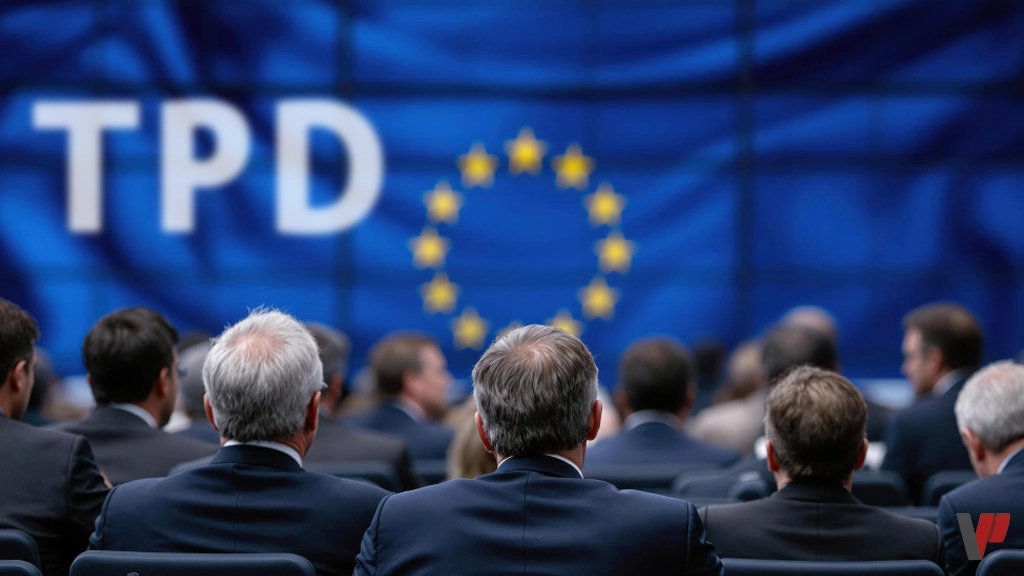
    There is a widening policy rift across Europe. On one side, there is a large and growing body of scientific evidence in support of tobacco harm reduction. On one hand, the European Commission is pushing an excessively restrictive regulatory agenda that threatens to roll back progress in reducing smoking. Central to this debate is the issue: should all nicotine products be treated equally, irrespective of their risk profile? And the answer to that question is, of course, a definitive no.

    Yet this is precisely what the European Union’s current trajectory indicates. Proposed changes to tobacco laws seem headed for stricter limits on vaping, nicotine pouches, and other reduced-risk alternatives. These range from flavour bans, higher taxes and broader classification frameworks that view all nicotine products alongside combustible cigarettes.

    This argument is often presented as a precaution, specifically fears regarding youth uptake and nicotine dependence. But it misses a critical distinction: combustion is the key driver of smoking-related disease, not nicotine, even if it is addictive.

    Ignoring this detail is particularly worrying when mounted against the large, growing body of evidence indicating vaping and other non-combustible nicotine products are proving effective as a smoking cessation tool. Independent analyses from the Cochrane Collaboration for instance, have consistently shown that nicotine vapes are more effective than conventional nicotine replacement products like patches and gum in helping smokers quit. And countries that have embraced this evidence are already achieving results they can measure.

    The proof of what actually works

    This cannot be clearer: the EU is tightening while Sweden has gotten rid of smoking to a near-elimination level by taking the exact opposite approach.

    The United Kingdom, for instance, has incorporated vaping into its public health approach, resulting in greater quit success and faster declines in smoking. But the most significant example comes from Sweden, where daily smoking has now been reduced to the lowest level ever recorded, at only 3.7 percent. Sweden took the pragmatic route, one of harm reduction — allowing access to lower-risk alternatives, like snus, nicotine pouches, and vaping products, rather than waging a war against smokers with punitive measures like taxes or overly restrictive bans on smoking.

    And the findings go beyond patterns of smoking. Both cancer incidence and mortality are notably lower than in the EU average among Swedes, who have much less tobacco-related disease overall. This cannot be clearer: the EU is tightening while Sweden has gotten rid of smoking to a near-elimination level by taking the exact opposite approach.

    Yet at the EU level, this evidence is frequently discounted or quoted selectively. In their reports, they concede lower levels of toxicant exposure from alternatives, then jump to potential risk, introducing a new dimension that warrants increased restrictions. That leaves a policy narrative that centers around uncertainty rather than proven successes. Meanwhile, Sweden has done what the rest of Europe (and the rest of the world) is still working toward: reaching a smoke-free status.

    Smoking declines stall across Europe

    The cost of the EU’s current approach is not theoretical — it exists in economic and behavioral reality. So when safer alternatives are more expensive, less accessible, or just a less appealing option, it gives smokers less incentive to switch. This can undermine cessation rates or even result in unintended consequences like continued cigarette smoking and the expansion of unregulated markets.

    Disappointingly, that’s already happening. In some European states, restrictive measures on vaping and nicotine products have been introduced in parallel to stubborn smoking rates and the development of illicit trade routes. Such outcomes undermine both public health and regulatory goals.

    Evidence vs ideology: The EU chooses the latter

    A more detailed look at recent EU policy discussions reveals an alarming trend. The scientific evidence for why harm reduction works is well established, yet it has not been fully translated into actionable policy recommendations. At the same time, less substantiated fears — including so-called “gateway effect” — are treated with undue rigor even as youth smoking rates have dipped steadily across the continent.

    Some experts say this reflects a broader ideological opposition to nicotine itself, rather than an objective analysis of relative risk. If true, this would be a fundamental shift away from outcome-based public health and toward a more prohibitionist model. And the stakes could not be higher.

    Tobacco use continues to be the number one cause of preventable death in Europe, killing hundreds of thousands a year. It is thus one of the most pressing public health priorities — accelerating the decline in smoking. Policies that instead inhibit access to effective cessation tools — and fail to support this goal — risk extending the burden of smoking-related disease for yet another generation.

    In contrast, countries that embrace risk-proportionate approaches are showing what’s possible. Sweden is the most vivid example, but not the only one. Other countries that took this approach to harm reduction are also showing more rapid declines in smoking, and the message could not be clearer: policy needs to follow science.

    From Science to policy failure

    Policymakers need to understand the risk continuum of different nicotine products and facilitate access to lower-risk options for adult smokers. Hence, they should regulate proportionately rather than uniformly and focus on real-world outcomes rather than theoretical concerns.

    The EU still has a chance to recalibrate its strategy. It can accelerate the path to a smoke-free future by leveraging proven models and applying the full force of science. The battle over nicotine policy in Europe is by no means concluded. But one thing is becoming increasingly clear: Restrictive, one-size-fits-all approaches are not providing the results necessary to end smoking. Sweden has shown what works. The question now is whether the rest of Europe is willing to open its eyes — or follow through on a course that threatens to undo one of the most hopeful public health strategies in a generation.

    The Cost of Bad Science: How Flawed Studies And Anti-Nicotine Bias Are Shaping European Tobacco Policy


    Source link

    EUs Face Nicotine Policies Proposed Restricitive Ridiculous Success Swedens
    Previous ArticlePennsylvania Governor Says Legalizing Marijuana Will Raise Revenue To Support Kids And Public Safety Programs
    Next Article Germany’s Cannabis Act Two Years On — What The Data Shows
    admin

    Related Posts

    A Destructive Global Tobacco Policy Shift? Prohibition Reigns Supreme as Evidence Keeps Being Ignored

    April 16, 2026

    Review: Drag 6 – Voopoo

    April 14, 2026

    VAPORESSO and DOJO Light Up TPE 2026 with Innovation and Champion Spirit

    April 12, 2026
    Leave A Reply Cancel Reply

    From Our Partners
    Sponsors
    Copyright © 2026. SmokeInsights.com

    Type above and press Enter to search. Press Esc to cancel.

    A practical guide to using Diners Club at UK online casinos in 2026, including real operator comparisons, deposit mechanics, bonuses and the best alternatives when the card is not available. read the full Diners Club UK casino guide

    A no-nonsense look at Dogecoin casinos available to UK players in 2026. We cover legal status, top sites, bonuses, games, and the real risks of gambling with DOGE. explore the best Dogecoin casinos for UK players

    A practical guide to UK casino sites that accept eCheck-style bank transfers, with licensed operators, payment speed, bonus checks, and the truth about ACH eCheck in the UK. read the full echeck casino UK guide

    A practical guide to UK online casinos that accept eCheque in 2026, including the legal reality, top offshore brands that still process eCheck deposits, and safer alternatives for British players. read the full eCheque casinos UK guide

    EntroPay shut down years ago, so no UK casino accepts it in 2026. Find out why, see the best UK casino alternatives, and compare real brands with bonuses and payment methods. read the full entropay alternatives guide

    A no-nonsense guide to Ethereum casinos for UK players in 2026: top sites, bonus reality, UK legal status, and fast payout options. read the Ethereum casino rankings

    Compare the best UK casinos that accept e-wallets in 2026. See which PayPal, Skrill, Neteller, and MuchBetter casinos offer fast withdrawals, fair bonuses, and UKGC safety. Read our guide to UK e-wallet casinos for 2026

    A practical guide to giropay casinos for UK players in 2026: which offshore brands still list giropay, how deposits work, alternatives, and the risks of non-UKGC sites. read the full giropay casino guide for UK players

    A practical guide to UK-licensed online casinos that accept Google Pay deposits in 2026. Covers how Google Pay works, top operators, bonuses, withdrawal limits, safety, and alternatives. read the complete guide to Google Pay casinos UK

    iDEAL is a Dutch payment method and not available at UK online casinos. This guide explains why, lists the best alternatives like Trustly and PayPal, and ranks the top UKGC-licensed casinos for 2026. read the full iDEAL UK casino guide