


They’re not banning weed. They’re deciding who’s allowed to grow it.
TLDR: A quiet change in federal law just made most cannabis seeds legally risky again by tying “hemp” status to what a seed is expected to grow into, not what it contains. That shifts power upstream, squeezes interstate access, and pushes home growers and small breeders into a tighter bottleneck. In other words: cannabis may stay “legal,” but seed access can still get enclosed.
Cannabis isn’t getting banned again. But parts of it are getting tightened, quietly, at the level that determines who can participate in the first place.
In The New Imperialism, David Harvey describes accumulation by dispossession as one of the defining mechanisms of late capitalism. Economic power increasingly expands through the reorganization of existing systems rather than through the creation of new ones, often by enclosing shared resources, restricting access, or transforming informal practices into regulated and scarce assets. Across modern history, land, housing, water, knowledge, and genetic material have all moved through this cycle, shifting from commons into controlled domains.
In 2026, cannabis seeds appear to be entering that same trajectory.
A Consequential Legal Shift
The federal funding bill passed to avert a government shutdown included a modification to the statutory definition of “hemp” that received virtually no public scrutiny.
Under the revised language, a viable cannabis seed qualifies as lawful hemp only if it would grow into a plant containing no more than 0.3% total THC, including THCA, measured on a dry-weight basis. Seeds genetically associated with plants exceeding that threshold are excluded from the hemp definition and therefore fall under the Controlled Substances Act as marijuana, with potential reclassification to Schedule III probably coming soon.
This change reorients the legal framework that has governed cannabis seeds since the 2018 Farm Bill. For several years, federal policy evaluated seeds based on their own chemical composition, which is effectively non-psychoactive. That interpretation allowed seeds to circulate through interstate commerce, online seed banks, and international imports, even when the mature plant would later exceed THC limits. The new rule places legal weight on genetic potential rather than present chemistry, shifting regulatory attention from what a seed contains to what it is expected to produce.
This is a structural change that could severely affect the seed industry and cannabis users throughout the United States.
Fuck Cannabis Liberalism, Go Cannabis Oligopolism
Research compiled in a white paper by Blimburn Seeds, based on a survey of more than 350 cases, shows that 97.4% of cannabis users believe adults should have the right to grow cannabis at home, and more than 93% report that they would grow, or strongly consider growing, if legally permitted.
At present, federal law does not prohibit home cultivation outright. As of now, 39 states have legal medical cannabis programs. Of those states, 25 allow individuals to grow cannabis at home, while eleven prohibit it. The latter group is composed mostly of solid GOP or GOP-leaning states —Florida, Texas, Utah, Louisiana, Arkansas, North Dakota, West Virginia, and Mississippi— many of which lack adult-use programs.
In states that do allow home cultivation, adults or medical patients retain the legal right to grow a limited number of cannabis plants at home, and those statutes remain in force.
Seeds as a Policy Choke Point
By redefining most cannabis seeds outside the federal hemp category, the new rule alters the legal status of seeds at points where federal authority is routinely exercised. Seeds associated with plants exceeding the THC threshold fall into a regulatory space governed by the Controlled Substances Act, which directly affects how they move through established commercial channels.
This shift concentrates regulatory pressure at existing enforcement chokepoints. The United States Postal Service and private carriers operate under federal law restricting the shipment of controlled substances, introducing legal ambiguity once hemp safe-harbor protections no longer apply. U.S. Customs and Border Protection becomes relevant for imported genetics previously cleared as hemp seed, increasing seizure risk at ports of entry. Interstate commerce, governed federally regardless of state legalization, becomes the central jurisdictional fault line.
Most of the seeds used in the US came from Europe and Canada. Wholesalers and seed banks that relied on the 2018 framework lose the statutory clarity that once allowed them to operate openly across state lines.
This enforcement model works through classification, shipping, and compliance rather than direct action against individual growers, aligning with the way federal drug policy has historically reshaped markets without widespread end-user intervention.
Seeds occupy an upstream position in the cannabis system, because (of course) every form of cultivation begins with genetic access, which means that regulating seeds reshapes participation without directly addressing plants, consumers, or retail markets. From a policy perspective, this approach influences future production by narrowing legal entry points rather than policing existing behavior, while also encouraging the expansion of informal and black-market seed exchange.
Unresolved Questions That Will Shape the Future
Many practical consequences of this shift remain uncertain, and that uncertainty carries its own effects as several questions now sit at the center of the seed market and the home cultivation ecosystem.
First, what counts as proof?
What documentation will seed sellers be expected to provide to demonstrate that a seed originates from a plant remaining under the THC threshold, especially when seeds are typically sold as genetics, not as lab-tested finished products? If the standard becomes “genetic association,” who decides what evidence is sufficient, and how that association is established?
Second, who enforces it, and through what mechanism?
Which agencies will handle oversight, given that the hemp definition falls under the USDA while the consequences of exclusion engage the Controlled Substances Act? In practice, does this function as a de facto prohibition on interstate movement of “drug-type” cannabis seeds, even between states that allow home cultivation?
Third, what happens to small breeders and genetic preservation?
How will small breeders preserve genetic lines and intellectual property when interstate exchange becomes legally unstable? Does the legal risk push breeding underground, narrow genetic diversity, or favor larger actors that can absorb compliance costs and legal exposure?
Finally, if cannabis is ultimately rescheduled, will that alter seed legality, or does the hemp definition continue to function as the primary gatekeeper?
These questions matter because regulatory ambiguity filters markets long before enforcement becomes explicit.
Enclosed Access to Seeds
Cannabis won’t be prohibited again, but it’s going to be enclosed, unless communities fight back and for their right to keep growing.
The purpose of this article is to ask the following question:
Who will be allowed to produce and sell the seeds, if the market gets severely restricted?
For decades, cannabis genetics circulated through informal and semi-formal networks that emphasized sharing, adaptation, and preservation. Seeds functioned as living archives, carrying regional traits, medical relevance, and cultural history. That circulation supported biodiversity and decentralized participation in cultivation.
Current policy direction moves genetic access toward enclosure. Seeds become regulated inputs rather than shared starting points. Legal risk concentrates downward, while compliance capacity concentrates upward. Over time, genetic diversity narrows and access aligns more closely with capital.
Late capitalism often advances through technical adjustments rather than overt prohibitions. Definitions, thresholds, and compliance standards reshape markets while preserving the appearance of continuity. Cannabis legalization has followed that trajectory repeatedly, expanding access rhetorically while introducing regulatory architectures that favor consolidation.
At this moment, restriction reappears at the genetic level. Retail markets continue to operate, home cultivation statutes remain intact, and legalization discourse persists, while access to seeds tightens and the conditions for participation shift toward fewer actors.
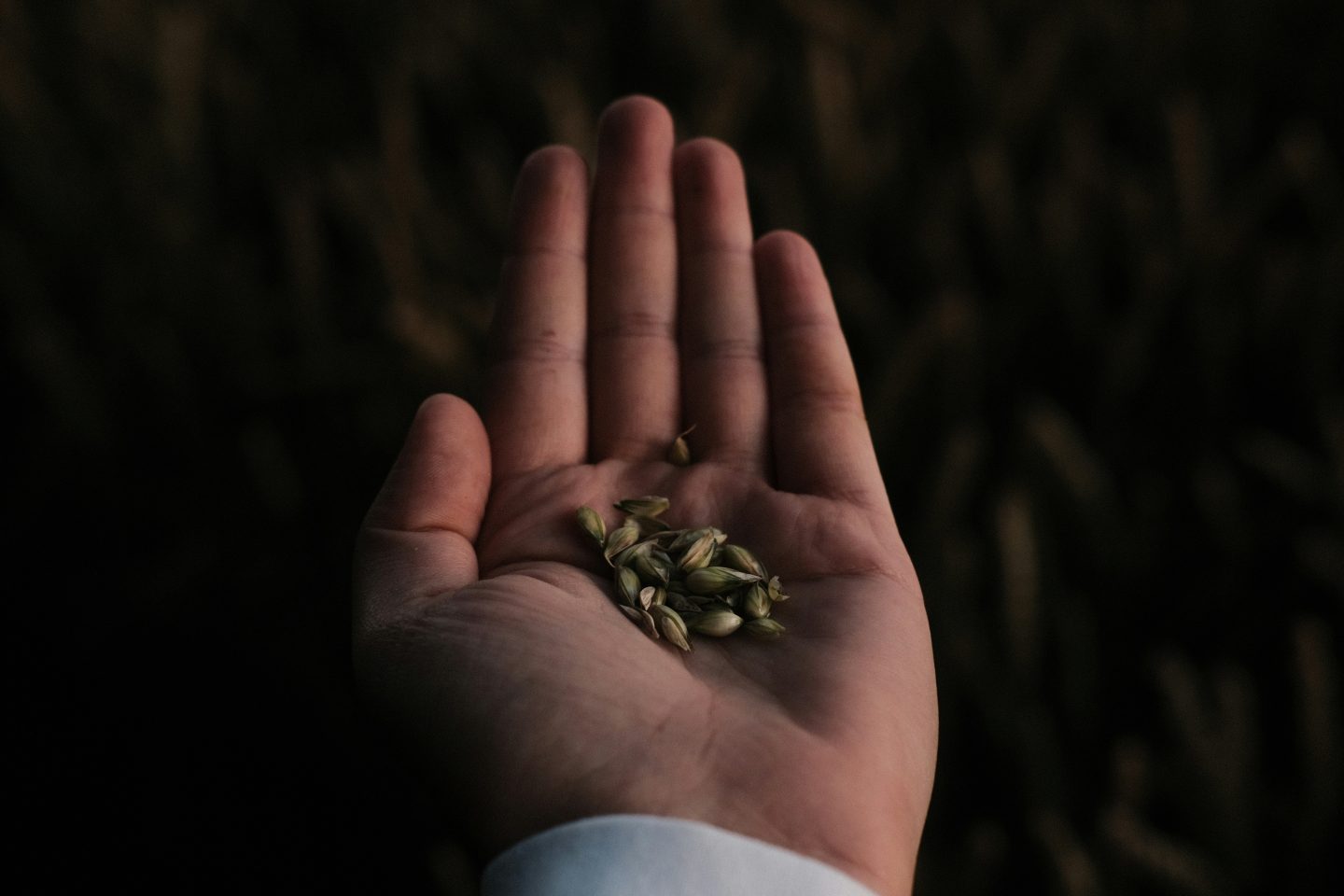
Photo by Marc Kleen on Unsplash
