


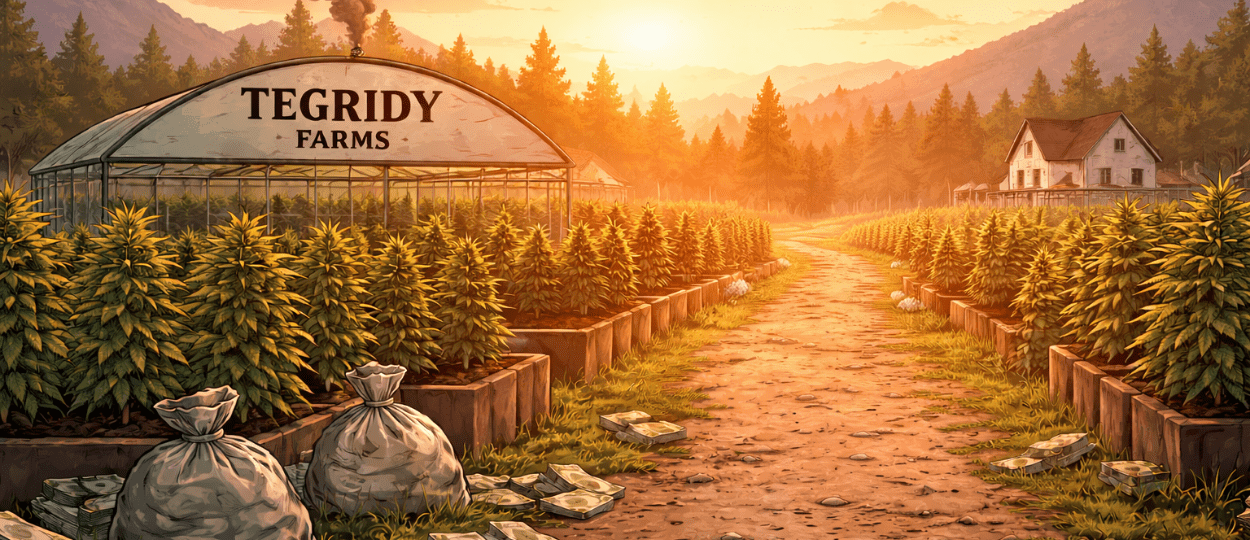
Tegridy Farms turned South Park’s most unpredictable character into a one-note caricature, mirroring how cannabis capitalism hollowed out something that once felt alive.
There’s a popular Toy Story meme on the internet where Andy, in a moment of self-improvement, drops Woody because he’s done, he’s served his purpose, and, because that’s life, he makes room for what’s next—maybe, just maybe, something better (Buzz Lightyear?). That meme perfectly captures what South Park did to Randy Marsh: he was a cool supporting character, he became the butt of all the gags, he was given the spotlight, and now that things have changed, now that he’s “no longer useful,” he’s back to square one. Everything that happened with Tegridy Farms was a disaster: Randy went from being one of the best characters in the series to one of the worst.
A comment circulating on social media makes this quite clear: “Trey Parker and Matt Stone are geniuses: with Tegridy Farms they created the cure for insomnia.” But let’s take a look back. In the episode titled Tegridy Farms, from season 22, Randy, in a classic fit of impulse, decides to leave his “modern life” and convinces his family to sell their house and move to the countryside to grow weed. So far, so good.
This marked the beginning of an unexpected saga that lasted nearly seven long years (2018–2025) and became the centerpiece of a series that has always been biting and often reads reality better than the news. Parker and Stone used Tegridy Farms to satirize the cannabis trade and, fundamentally, to make Randy the show’s protagonist, shifting the focus away from the kids. It often felt like they became more interested in writing Randy than children.
Previously, Randy had delivered some spectacular appearances: he was Lorde, he tried to defecate the world’s largest turd, he inoculated himself with testicular cancer to get a prescription for weed, he became obsessed with Guitar Hero, he went emo, he mistook his genital fluids for ectoplasm, he led a hysterical group seeking refuge from global warming, and he tried to “become” Indigenous after being offended by some statues of Christopher Columbus. Just to name a few.
But Tegridy Farms corrupted him. It tainted his spirit. It distanced him from the kids. The hyperfocus on a single issue stripped him of his essence: the fleeting obsession with anything. It turned him into a full-blown phony, a cynic, a guy obsessed with money. The cannabis industry changed him. Like when he first opened Tegridy Farms and launched an advertisement eerily similar to that of the North American cannabis giant MedMen. His whole worldview became corporate, and weed became a one-dimensional tool for making money.
He witnessed firsthand the obstacles, bureaucracy, and restrictions imposed by the cannabis industry in the United States. He made less money than he expected. He lost his mind. He became addicted to ketamine and had to reinvent his business. Once, twice, a thousand times. Like in the episode Christmas Snow, where, to “recapture the Christmas spirit,” he produced “Christmas Snow,” a joint that came with “something extra.” Thus, a blend of leftovers from the previous season, with the special addition of cocaine, became a sensation in South Park. “Community is what matters,” they tell Randy, and he launches into a rant about “clean, farm-grown cocaine.”
For Randy, community doesn’t matter. He ended up selling garbage to keep his business afloat. “We cut out the middleman, nobody dies from impurities,” Santa Claus celebrates in that same episode. Randy reinvented himself so many times that he became a real jerk. In the episode Mexican Joker, he warns that his sales have dropped due to the rise in home cultivation and, to eliminate the competition, anonymously calls ICE to report his neighbors for having “illegal immigrants” working in their gardens.
Or when he traveled to China on business with Mickey Mouse to sell pot to the Chinese, killed Winnie the Pooh to support his schemes, and became patient zero of COVID. Fine. That was funny. But while South Park has always maintained its critical and satirical edge, the ongoing review of the industry’s evolution and lack of profitability transformed Randy into a character with a troubling lack of sensitivity. He became driven almost exclusively by the commodification of weed. Even Towelie lost his charm. It hurts to admit it, but both characters became predictable.
Their clumsiness and appetite for chaos became fundamentally different from, say, Homer Simpson, who doesn’t act out of malice but out of sheer stupidity. Randy became a kind of villain, dragging his family into his mess and finding in weed a cynical way to make money. What was once a reliable source of laughter began to generate anger instead. Try this exercise: ask your friends what they think of Randy now. You might be surprised.
Thus, the spiritual connection with Randy, the totally ordinary suburban dad, stopped working. He went from being a conduit for uncomfortable emotions to a character driven almost entirely by money. We all had a bit of Randy inside us. We could project empathy onto him, even in our dirtiest fantasies, even when he was the worst person in South Park. But it became exhausting. Today, Randy feels like a reverse Ned Flanders. One exudes relentless kindness; the other became so detached from his original narrative that he turned into a real piece of shit. His evolution was devolution. And what at times aimed to be biting commentary on the 420 ecosystem often boiled down to “weed, weed, weed.” We love Cheech & Chong, but those jokes only work for them anymore.
Trey Parker and Matt Stone eventually slammed on the brakes. The reaction on social media was clear: enough with Tegridy Farms. And amid a confusing stretch of developments—why did the last season only have five episodes? Do they want to leave Paramount? Are they hoping Donald Trump will sue them? Did they censor the Charlie Kirk episode? What’s really going on?—they shifted focus squarely onto Donald Trump. Like their portrayals of Bin Laden or Saddam Hussein, Trump was rendered evil simply because “he’s evil.” He impregnated and abandoned Satan himself. He used Towelie to clean up his spunk.
That pivot triggered another change. Randy left the cannabis business because he didn’t find it profitable and because it demanded “too much sacrifice.” He sold everything and returned to his old patterns. He became obsessed with AI and the idea of ChatGPT working for him. He tried energy drinks. He became an influencer. He’ll try something else next. Would Randy have stayed in cannabis if Joe Biden had won the election? We’ll never know.
Is Randy’s journey a reflection of the cannabis industry in the United States? Did hippie activism devolve into aggressive corporatism? In real life, large corporations sought to eliminate small growers, and regulation frequently ended up favoring entrenched players. Marketing turned absurd, packed with celebrities, luxury packaging, and hollow “lifestyle” promises that had little to do with the plant itself, prioritizing profit over quality or ethics.
The industry constantly contradicts itself, and legalization increasingly feels like a nostalgic promise. Corporate machinery suffocated community, just as Randy ultimately conspired against his own family. Didn’t you feel angry every time Stan suffered because of his father? That’s why, despite dragging on far too long, Randy Marsh ended up cementing a metaphor for how capitalism can corrupt what once presented itself as a dream of freedom.
Looking ahead, a cooling-off phase seems inevitable. Secondary storylines, occasional spotlights, and fresh delusions would all be welcome. It’s time to return Randy to his roots: selfish, clumsy, slightly unhinged, and unconsciously a son of a bitch. A simple man with complex obsessions. Nobody minds that. But these years, where everything funneled back to Tegridy Farms and weed became a repetitive crutch, were draining.
The creators of South Park fell so deeply in love with Tegridy Farms that the saga became a creative trap. They got tangled in their own satire and lost sight of the show’s broader engine. In trying to reflect the bureaucracy, ambition, and absurdity of the American cannabis industry, they flew Randy too close to the sun. And eventually, he burned out.
