


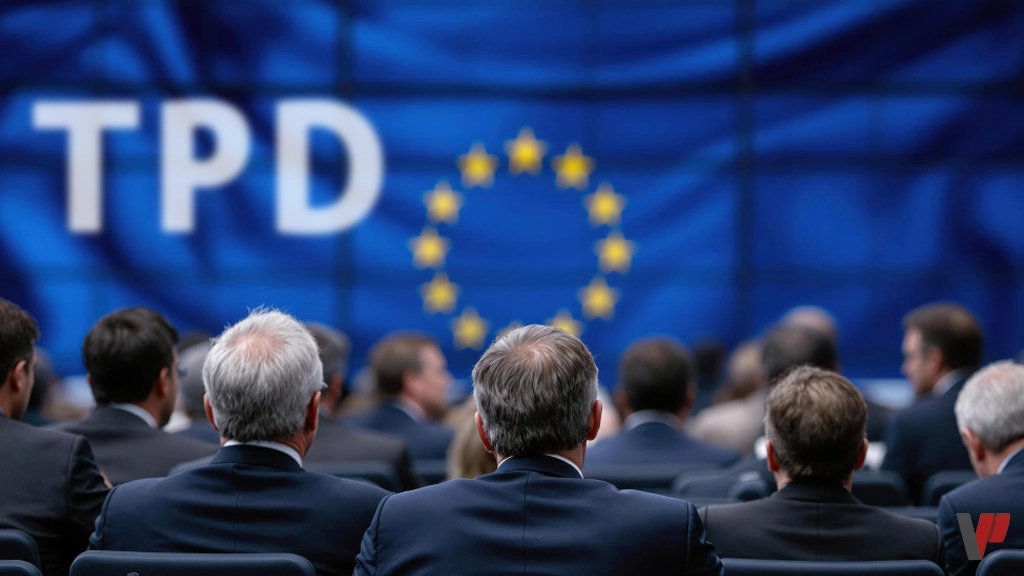
Yet this is precisely what the European Union’s current trajectory indicates. Proposed changes to tobacco laws seem headed for stricter limits on vaping, nicotine pouches, and other reduced-risk alternatives. These range from flavour bans, higher taxes and broader classification frameworks that view all nicotine products alongside combustible cigarettes.
This argument is often presented as a precaution, specifically fears regarding youth uptake and nicotine dependence. But it misses a critical distinction: combustion is the key driver of smoking-related disease, not nicotine, even if it is addictive.
The proof of what actually works
This cannot be clearer: the EU is tightening while Sweden has gotten rid of smoking to a near-elimination level by taking the exact opposite approach.
The United Kingdom, for instance, has incorporated vaping into its public health approach, resulting in greater quit success and faster declines in smoking. But the most significant example comes from Sweden, where daily smoking has now been reduced to the lowest level ever recorded, at only 3.7 percent. Sweden took the pragmatic route, one of harm reduction — allowing access to lower-risk alternatives, like snus, nicotine pouches, and vaping products, rather than waging a war against smokers with punitive measures like taxes or overly restrictive bans on smoking.
And the findings go beyond patterns of smoking. Both cancer incidence and mortality are notably lower than in the EU average among Swedes, who have much less tobacco-related disease overall. This cannot be clearer: the EU is tightening while Sweden has gotten rid of smoking to a near-elimination level by taking the exact opposite approach.
Smoking declines stall across Europe
The cost of the EU’s current approach is not theoretical — it exists in economic and behavioral reality. So when safer alternatives are more expensive, less accessible, or just a less appealing option, it gives smokers less incentive to switch. This can undermine cessation rates or even result in unintended consequences like continued cigarette smoking and the expansion of unregulated markets.
Evidence vs ideology: The EU chooses the latter
A more detailed look at recent EU policy discussions reveals an alarming trend. The scientific evidence for why harm reduction works is well established, yet it has not been fully translated into actionable policy recommendations. At the same time, less substantiated fears — including so-called “gateway effect” — are treated with undue rigor even as youth smoking rates have dipped steadily across the continent.
Some experts say this reflects a broader ideological opposition to nicotine itself, rather than an objective analysis of relative risk. If true, this would be a fundamental shift away from outcome-based public health and toward a more prohibitionist model. And the stakes could not be higher.
Tobacco use continues to be the number one cause of preventable death in Europe, killing hundreds of thousands a year. It is thus one of the most pressing public health priorities — accelerating the decline in smoking. Policies that instead inhibit access to effective cessation tools — and fail to support this goal — risk extending the burden of smoking-related disease for yet another generation.
From Science to policy failure
Policymakers need to understand the risk continuum of different nicotine products and facilitate access to lower-risk options for adult smokers. Hence, they should regulate proportionately rather than uniformly and focus on real-world outcomes rather than theoretical concerns.
