


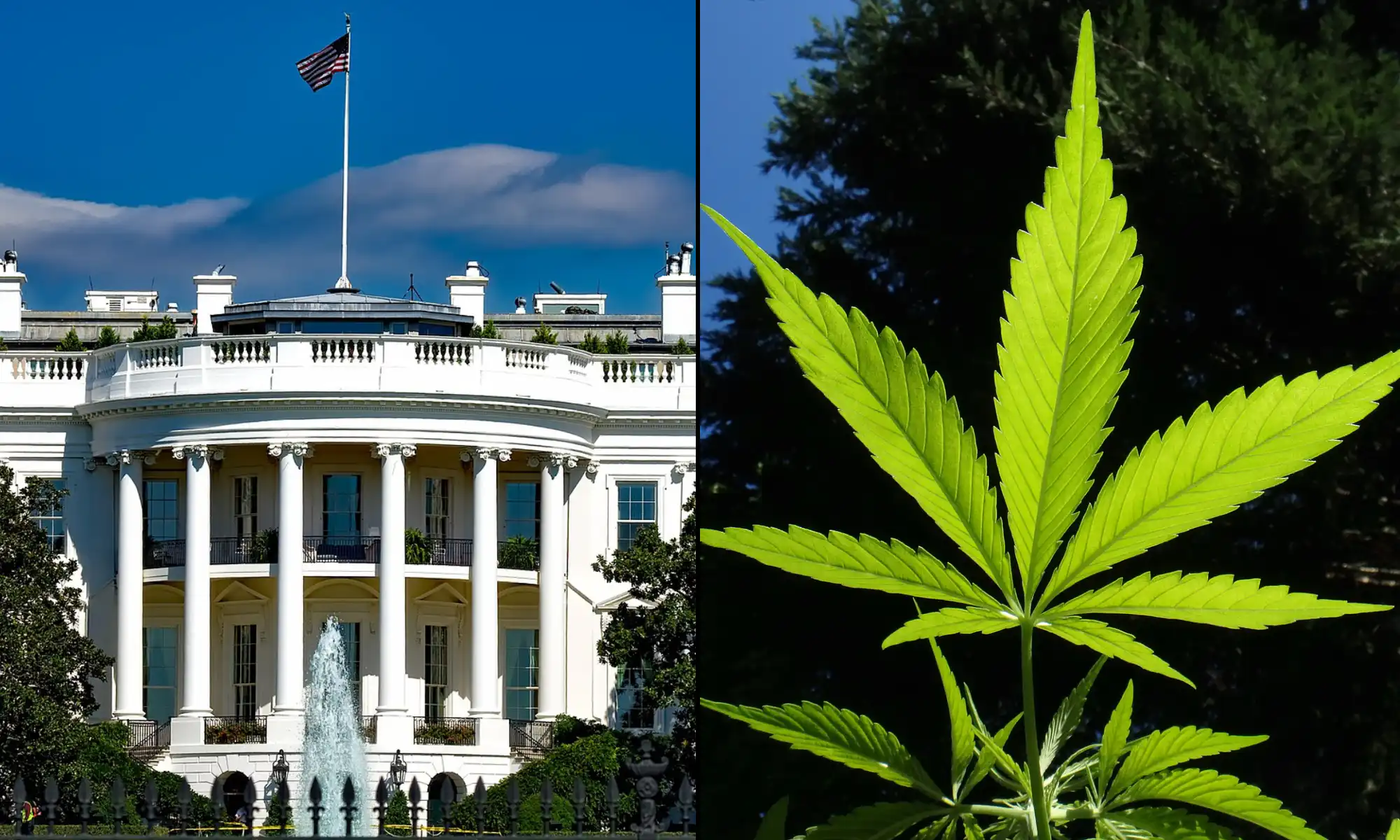
The Food and Drug Administration (FDA) has submitted a proposed cannabis products enforcement policy to the White House for review that concerns regulatory issues specifically related to CBD.
The White House Office of Management and Budget’s (OMB) Office of Information and Regulatory Affairs (OIRA) posted a notice that it received the submission from FDA, which falls under the U.S. Department of Health and Human Services (HHS), on Friday.
While the update doesn’t include the text of the proposal that’s now under OIRA review, it’s titled “Cannabidiol (CBD) Products Compliance and Enforcement Policy.”
The fact that the document is coming from FDA may shed light on its content, as the agency recently missed a congressional imposed deadline to publish a list of known cannabinoids as federal hemp laws are set to change later this year.
Another possibility that’s being floated by industry observers is that it ties back to an executive order on marijuana rescheduling President Donald Trump signed in December that contained provisions on providing federal health insurance coverage of CBD for certain patients. But that rulemaking is being facilitated by the Centers for Medicare & Medicaid Services (CMS), which is not listed as the agency that submitted the proposal to OIRA.
Marijuana Moment reached out to HHS and FDA for comment, but a representative was not immediately available.
As part of appropriations legislation that Trump signed into law, many hemp products that were legalized during his first term in office under the 2018 Farm Bill will be prohibited once again starting in November. The spending measure included separate provisions, however, to have FDA and other relevant agencies study the cannabinoid marketplace and develop lists of cannabis components.
After the bill was signed, FDA was given 90 days to publish 1) a list of “all cannabinoids known to FDA to be capable of being naturally produced” by cannabis 2) a list of “all tetrahydrocannabinol class cannabinoids known to the agency to be naturally occurring in the plant” and 3) a list of “all other know cannabinoids with similar effects to, or marketed to have similar effects to, tetrahyrocannabinol class cannabinoids.”
Further, the agency was tasked with providing “additional information and specificity about the term ‘container’” with respect to hemp product THC serving sizes. In the bill, the term is defined as “the innermost wrapping, packaging, or vessel in direct contact with a final hemp-derived cannabinoid product in which the final hemp-derived cannabinoid product is enclosed for retail sale to consumers, such as a jar, bottle, bag, box, packet, can, carton, or cartridge.”
The lists and information was due on February 10, but FDA did not follow through by the deadline.
It’s possible, of course, that the new policy sent to OIRA is unrelated to FDA’s mandate to create the cannabinoid list. Others are floating the idea that this represents a next step toward expanding federal health insurance coverage in a way that would make CBD products available to certain patients.
An executive of a hemp company that’s working with CMS on the CBD coverage issue said last month that the agency has already finalized a rule to provide the federal health insurance coverage option. That rule is advancing in accordance with an executive order Trump signed to move marijuana from Schedule I to Schedule III of the Controlled Substances Act (CSA).
Mehmet Oz, administrator of CMS, spoke about the CBD components of the initiative at the signing ceremony for the order, crediting Trump and HHS Secretary Robert F. Kennedy Jr. for “pushing for change” and “relentlessly” pursuing an agenda rooted in a “deep passion for research.”
The plan has been to create a pilot program enabling eligible patients to access hemp-derived cannabidiol that’d be covered under federal health insurance plans, projected to launch by April, according to Oz.
While the broader rules on the CBD Medicare pilot program haven’t been publicized yet, CMS’s website briefly details how it’s navigating hemp-related issues as part of regulatory models under LEAD, the Accountable Care Organization (ACO) and the Enhancing Oncology Model (EOM).
One outstanding question concerns coverage eligibility. As described by the administrator in December, it would affect those 65 and older who qualify for Medicare, but the specific qualifying conditions weren’t detailed. There were repeated mentions of chronic pain, specifically related to cancer, but it’s possible the CBD eligibility criteria includes additional conditions.
While CMS implemented an earlier final rule last April specifically stipulating that marijuana, as well as CBD that can be derived from federally legal hemp, are ineligible for coverage under its Medicare Advantage program and other services, the agency is now revising that policy.
CMS had already announced certain changes as part of a rulemaking process that was unveiled late last year, affecting “marketing and communications, drug coverage, enrollment processes, special needs plans, and other programmatic areas” for insurance programs it oversees. One of those changes dealt with cannabidiol coverage.
The rule as proposed would amend regulations, which currently state that any “cannabis products” cannot be covered. The policy would prevent coverage for only “cannabis products that are illegal under applicable state or federal law, including the Federal Food, Drug, and Cosmetic Act.” Since hemp and its derivatives like CBD are federally legal, the change suggests patients in states where such products are legal could make valid insurance claims to pay for the alternative treatment option, as long as the product is also federally legal.
Yet another possibility for the new submission under OIRA review is that it’s unrelated to either the FDA mandate or CMS health coverage developments. FDA has faced scrutiny for years after declining to establish regulations allowing for the lawful marketing of CBD in the food supply, and so there are any number of regulatory issues the proposal could address.
