


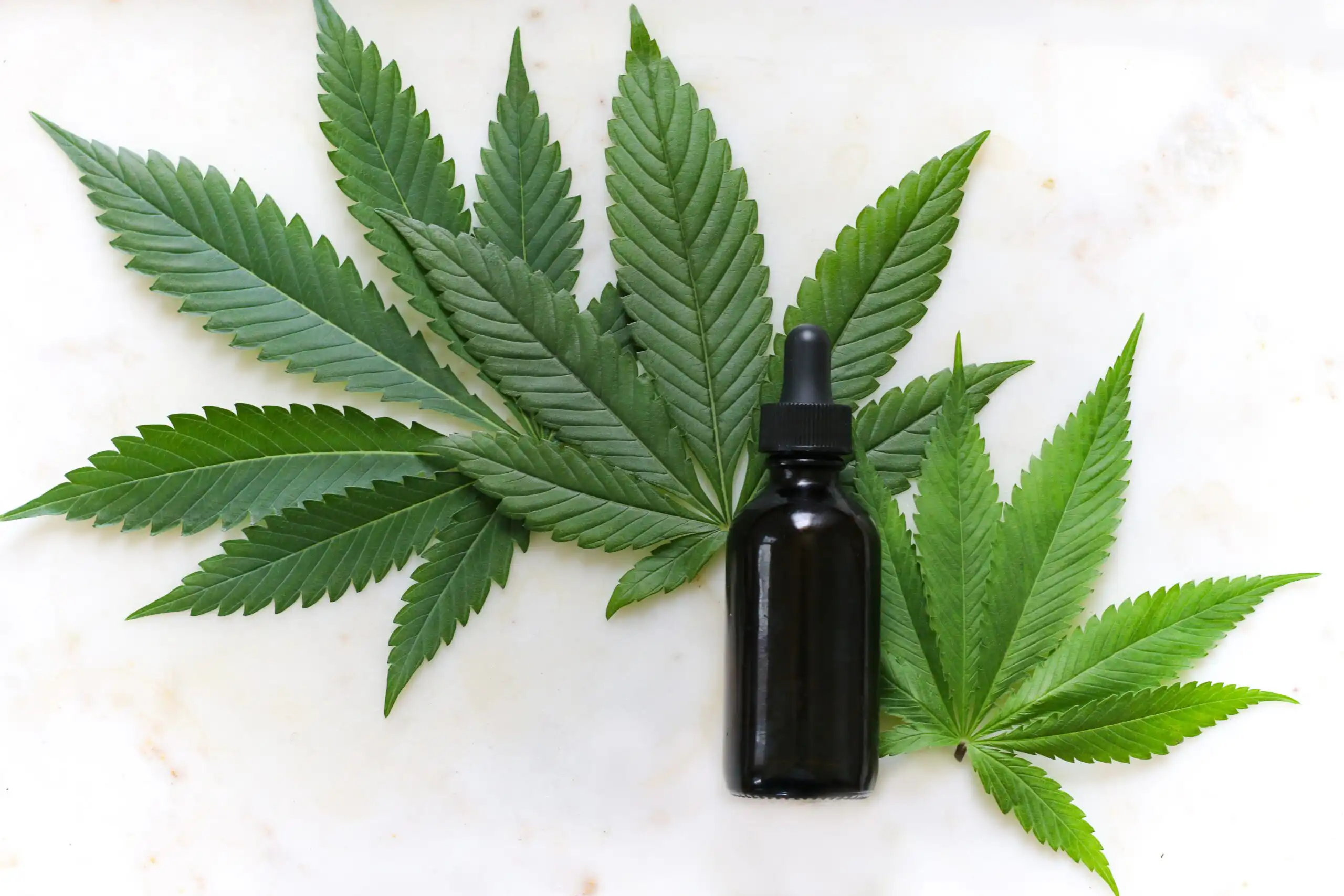
The Centers for Medicare & Medicaid Services (CMS) will soon be launching a pilot program that would cover the costs of CBD products for eligible patients under certain federal health insurance plans. But newly reported details about the effort signal that it policy could conflict with a separate law redefining hemp in a way that severely restricts allowable THC content.
CMS Administrator Mehmet Oz has previously described the CBD coverage plan that’s being implemented in response to an executive order President Donald Trump signed in December that also directs the finalization of a federal marijuana rescheduling rule, saying the CBD components of the plan could be rolled out as early as April.
But as the agency has prepared to provide cannabidiol coverage under the pilot program, it has set an initial limit of 3 milligrams of total THC (including delta-8, delta-9 and delta-10 THC, for example) per serving—as Cannabis Wire first reported—which is more than seven times the THC limit for hemp-derived cannabinoid products as defined under a spending bill Trump signed last year.
The cannabis section of that agriculture-focused spending legislation restricts total THC content to .4 milligrams per container. And that law, which industry stakeholders say will effectively eliminate the consumable cannabinoid market, takes effect in November.
A CMS spokesperson told Cannabis Wire that agency “will adjust its definition in accordance with the law,” without clarifying how it arrived at the 3 milligram total THC limit in the first place.
Bipartisan lawmakers and hemp industry advocates have pushed to delay the enactment of the new hemp THC restrictions signed by Trump, but those efforts have not gained traction. An amendment on the issue was not adopted at a recent House committee markup of a new Farm Bill.
Marijuana Moment reached out to CMS further inquiring about the apparent THC policy conflict, but a representative was not immediately available.
The planned pilot program “expressly excludes inhalable products,” the spokesperson also said. And the “orally administered” CBD products that are made available would be subject to “state and local law,” though that raises other questions given the complex patchwork of state-level hemp and cannabinoid policies.
In any case, the newly reported details about the yet-unpublished rules for the pilot program comes weeks after an executive at a hemp company that’s been collaborating with CMS said that the agency had already finalized its plans for federal health insurance coverage of cannabidiol.
“This pilot will help the [Food and Drug Administration, or FDA] move from uncertainty into a practical framework with clear dosing, risk mitigation and clear manufacturing label expectations that end up rewarding the responsible companies and, in the end, protect and serve the consumer,” Jared Stanley, co-founder of the cannabis company Charlotte’s Web, said.
“As far as the population, it was important to note that it was stated in the briefing that this is starting in a pilot, but expecting to expand beyond just the pilot,” he said. “So that’s multiple indications that we expect to see. And we’re very excited. It has amazing potential.”
Relatedly, the CMS spokesperson told Cannabis Wire that while it couldn’t provide specific numbers around patients expected to participate in the pilot program, those details will come out when they’re available, and the agency would generally provide updates on the rollout “in the coming weeks.”
Asked about the status of the CBD rulemaking last month, CMS directed Marijuana Moment to a webpage with an FAQ that describes the integration of hemp into a Beneficiary Engagement Incentive (BEI) program under the agency’s Long-term Enhanced ACO Design (LEAD) Model.
“The Substance Access BEI gives model participants the option of consulting with their patients about the possible use of eligible hemp products,” the CMS page says. “The implementation of this BEI and any related dispensing would be funded entirely at the participant’s expense; CMS would not cover the cost of such products. Further, CMS will have strict program integrity safeguards to ensure that these incentives do not result in program or patient abuse.”
“The Substance Access BEI is only available to participants in states where the eligible hemp products are considered legal,” it says.
While the broader rules on the CBD Medicare pilot program haven’t been publicized yet, CMS’s website briefly details how it’s navigating hemp-related issues as part of regulatory models under LEAD, the Accountable Care Organization (ACO) and the Enhancing Oncology Model (EOM).
Oz, the CMS administrator, explained in December that the policy change will “allow millions of Americans on Medicare to become eligible to receive CBD as early as April of next year—and at no charge if their doctors recommend them.”
He added that Medicare Advantage insurers CMS has contacted are “also agreeing to consider CBD to be used for the 34 million Americans that they cover.”
One outstanding question concerns coverage eligibility. As described by the administrator in December, it would affect those 65 and older who qualify for Medicare, but the specific qualifying conditions weren’t detailed. There were repeated mentions of chronic pain, specifically related to cancer, but it’s possible the CBD eligibility criteria includes additional conditions.
At the signing ceremony, Oz also gave kudos to Howard Kessler, founder of The Commonwealth Project, which produced a video about the benefits of cannabidiol for seniors that Trump shared on Truth Social last year and who apparently has pressed the president to enact reform to expand cannabis access.
While CMS implemented an earlier final rule last April specifically stipulating that marijuana, as well as CBD that can be derived from federally legal hemp, are ineligible for coverage under its Medicare Advantage program and other services, the agency is now revising that policy.
CMS had already announced certain changes as part of a rulemaking process that was unveiled late last year, affecting “marketing and communications, drug coverage, enrollment processes, special needs plans, and other programmatic areas” for insurance programs it oversees. One of those changes dealt with cannabidiol coverage.
The rule as proposed would amend regulations, which currently state that any “cannabis products” cannot be covered. The policy would prevent coverage for only “cannabis products that are illegal under applicable state or federal law, including the Federal Food, Drug, and Cosmetic Act.” Since hemp and its derivatives like CBD are federally legal, the change suggests patients in states where such products are legal could make valid insurance claims to pay for the alternative treatment option, as long as the product is also federally legal.
Meanwhile, following the White House announcement in December, Oz spoke with NewsNation about the policy change, responding to a question about how the broader marijuana rescheduling decision squares with the Trump administration’s aggressive efforts to stymie the flow of other illicit drugs, particularly fentanyl.
“We think they fit hand in hand,” he said. “This is really about researching—specifically CBD, which is hemp-derived endocannabinoids [sic]—are actually worthy of Americans using them,” he said. “It’s hard to do some of this work, especially with medical marijuana. And this is not about legalization of marijuana.”
“There is no legalization language at all,” he added. “It’s about rescheduling this class of product so that it can be researched more readily.”
The idea that marijuana has no medical value, as its currently defined as a Schedule I drug, is “just patently wrong for marijuana,” he said, noting that the Food and Drug Administration (FDA) has approved certain cannabis-based drugs for conditions such as epilepsy “that work quite nicely.”
“That belief that it should be Schedule I is just an incorrect place to put it,” he said. “Schedule III seemed to make sense to the president. He argued that it allows us to do the research more readily.”
“We’re finding a way to allow Medicare beneficiaries to get access to some of these products. And so, within Medicare, we have the ability, for the first time ever—and we delivered on this promise to the president today—to allow doctors to recommend hemp-derived CBD for patients who have cancer, for example, and have a lot of pain from that.”
The administrator said surveys show a majority of seniors who take CBD for pain management find it beneficial, and the White House wants to “make it easier for patients to access this” and allow them to access the cannabinoid at “no charge” through the federal health insurance program.
Meanwhile, Oz took a different tone last month when he warned that “there are going to be consequences” as more Americans choose marijuana over alcohol—including problems caused by “high-dose hemp and CBD.”
In the background, the U.S. Department of Health and Human Services (HHS) and FDA recently submitted proposed regulations concerning CBD enforcement and compliance with the White House Office of Management and Budget’s (OMB) Office of Information and Regulatory Affairs (OIRA). There’s been speculation that the rule could be related to the CMS pilot program, but that hasn’t been confirmed. And it’s also possible the proposal is linked to an unrelated FDA mandate from Congress to produce a list of known cannabinoids ahead of the federal hemp redefinition.
Photo courtesy of Kimzy Nanney.
