


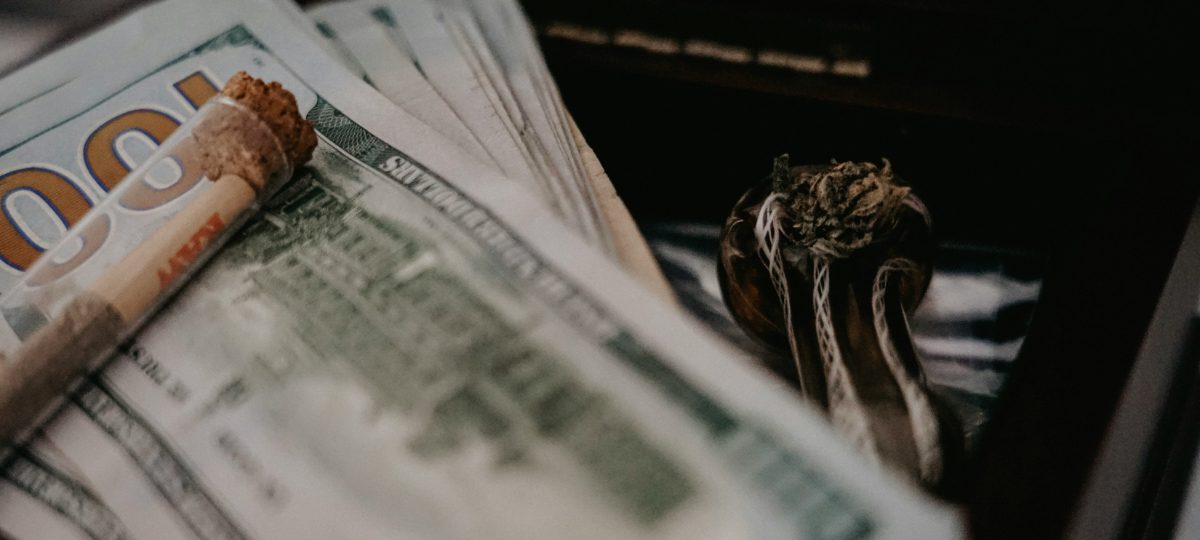
How speculative finance and distorted incentives hollowed out American weed.
On a sunny afternoon in Santa Monica in the spring of 2018, I sat on a hotel patio with the owners of two up-and-coming cannabis businesses: one a popular low-cost brand and the other a NorCal farming co-op. I had an all-cash offer from investors in Toronto for roughly $100 million to acquire both their companies in a ‘roll-up-go-public’ play. They told me they were waiting for something closer to ten times that amount.
I wasn’t that surprised—cannabis was hot, and stories of massive paydays were being recounted with hushed excitement in grow rooms and boardrooms alike. With Canadian public companies like Canopy Growth reporting multi-billion-dollar investments from multinational liquor conglomerates and their market caps surging to around $12 billion, the excitement was infectious.
Magical Thinking
As the next years would show, this magical thinking pervaded the whole industry, the result of a tried-and-true scheme that made a bunch of Canadian investment bankers very rich, while poisoning the heart of U.S. cannabis.
As California cities rolled out their retail application processes, my own little cannabis company was acquiring licenses and making small investments along the supply chain, attempting to build a robust and resilient “anti-fragile” ecosystem, uncertain about how this industry would shake out.
We had partnered with the largest cannabis retailer in California, helping them expand state-wide while turning cheaply acquired local licenses and elbow grease into a meaningful ownership stake in the company. Its California sales approached roughly a quarter-billion dollars in 2020, and we had front-row seats to the spectacular crash that followed.
The market and its promise peaked during the first two years of COVID, as Americans hunkered in their homes. Our on-demand delivery platform took full advantage of the concurrent surge in delivery services and broader recreational drug use. But as government stimulus money started to dry up and America tentatively emerged from lockdowns, it became clear that the California market was in shambles. Retail dispensaries couldn’t pay invoices, wholesale cannabis prices cratered, killing cultivators from Ventura to Humboldt, and capital dried up.
In some cases, the black market had figured out how to get legally grown cannabis out of the California track-and-trace system and onto trucks destined for other states, distorting demand signals and leading to massive over-production and subsequent price crash. A flurry of quixotic, yet existential, mergers and acquisitions began as receiverships and bankruptcies rocked the industry.
Harborside Dispensary, a bedrock of California anti-prohibitionist activism, was repackaged by a former Barclays Bank executive and smashed together with San Diego retail giant Urbn Leaf and legacy brand Loud Pack. By the end of 2024, the new entity, State House, had filed for bankruptcy, ending 20 years of business in the Oakland weed scene.
Around the same time, Jay Z’s brand, Monogram, and its parent company tipped into insolvency and were stripped for parts. Flow Kana and Medmen, companies that were held up as exemplars of “new” cannabis, followed suit, having burned through hundreds of millions of dollars by industry estimates, their ubiquitous billboards yellowing in the Californian sun.

What the Hell Happened?
By 2025, the list of bankruptcies, foreclosures, and receiverships had grown to include many of the companies that had picked up the pieces of the previous year’s insolvencies. At the same time, retail sales, which peaked in 2021 at almost $6 billion, shrank to around $4 billion. The decline was disorienting in its alacrity.
The inevitable post-mortems have been just as fast and furious: Incompetent and corrupt politicians. State taxes. Federal taxes. Cost of capital. Regulations. The black market. The bankers. The gangsters. The lawyers. And while all of these may have had a hand in the U.S. cannabis market’s downfall, they are simply symptoms of the real problem: Canadian capital markets.
Canadian investment bankers, to be precise. These penny-stock mining hucksters knew a perfect storm when they saw one and took the industry for a ride.
There are four primary culprits that enabled this grift.
- Investors were conditioned by the Tech sector into using something called “gross revenue” to assess the potential value of a company, rather than how much it actually made.
- Federal illegality in the U.S. constricted access to traditional banking and liquidity, creating a dangerous and desperate blindness to risks associated with the types of funding on offer and the strings attached.
- Soaring speculative valuations in the Canadian cannabis market served as “proof of concept,” propping up even the riskiest deals.
- As the informal market transitioned into a legal market, investors, without sufficient historical data, were unable to properly assess the road ahead.
These conditions meant bankers could convince the industry to build companies that looked like big companies. Rather than building lean, nimble businesses able to adjust and withstand the challenges and uncertainty facing the new U.S. cannabis market, entrepreneurs tinkered with board composition, leadership teams with fancy CV’s (and even fancier salaries), and complicated financing structures.
Instead of considering rational infrastructure needs or operating efficiencies, entrepreneurs were fed narratives by men with disarming Canadian accents, designed to inflate cannabis companies for the stock market rather than build sustainable businesses. Canadian investment bankers and stock promoters delighted in the fact that, because of cannabis’ illegality at the U.S. federal level, companies with American assets were blocked from both the U.S. stock market and the Toronto Stock and Venture Exchanges (TSX and TSXV). That meant that the most attractive place for these listings was the Canadian Securities Exchange (CSE), which had significantly lower disclosure and oversight requirements.
In the years prior to the 2023 collapse, there were signals that the hyper-focus on building BIG companies was driving an insatiable need for more capital, requiring stock prices and company valuations, increasingly untethered to any rational analysis, to spiral up. As an example, one company we worked with literally built a cannabis storage refrigerator the size of an airplane hangar.
By 2020, California cannabis businesses had purchased an estimated $600 million worth of THC oil extraction equipment, when closer to $70 million would’ve been sufficient to supply the entire California market with THC oil. Success was just around the corner, said the bankers. American novelist Upton Sinclair once wrote: “It is difficult to get a man to understand something, when his salary depends on his not understanding it.”
A senior executive from Flower One, a large-scale indoor cultivator that had roared to massive success in the early days of Nevada’s recreational cannabis market, told me they planned to spend around $100 million on a California facility. When I asked why the cost was so high, he said, “Our investors want a state-of-the-art facility with robots assisting operations.”
After 50 years of being grown in musty basements and remote backwoods, one of the most competent growers in the world had been convinced by bankers that the future was robots.
By 2022, the company was filing for bankruptcy protections in a British Columbia court and was delisted from the CSE. Creditors got back roughly 10 cents on the dollar, while common shareholders got nothing. The investment bankers walked away with millions.
California Cannabis Up in Smoke?
Billions of dollars appear to have gone up in smoke, and rusting cannabis infrastructure now litters California’s cities. Oregon, Washington, Michigan, Arizona, and Colorado face similarly dire straits. Communities formerly flush with black and gray market jobs now have shuttered main streets as weed prices collapsed and cannabis businesses closed. Even the businesses that survived these initial crashes were left infected by the market’s structural faults, unable to pivot fast enough to respond to the new reality.
As inflation surged and the global economy contracted, capital spigots turned off, leaving these lumbering giants, no longer supported by the scaffolding of financial markets, to collapse under their own weight.
So here we sit, in the ruins of an industry that had once held so much promise. Descheduling, banking, and federal tax relief all sit just on the horizon, bumping cannabis stocks around like a pinball machine. But as we watch the world now fret about the AI investment bubble, I’m left asking myself, was what happened and may happen, to U.S. cannabis the fault of greedy Canadian investment bankers, or is there a more pernicious problem at the heart of our economic system? Like so much of this age of late-stage capitalism, for cannabis, the tails seem to be wagging the dogs.
This article is from an external, unpaid contributor. It does not represent High Times’ reporting and has not been edited for content or accuracy.
